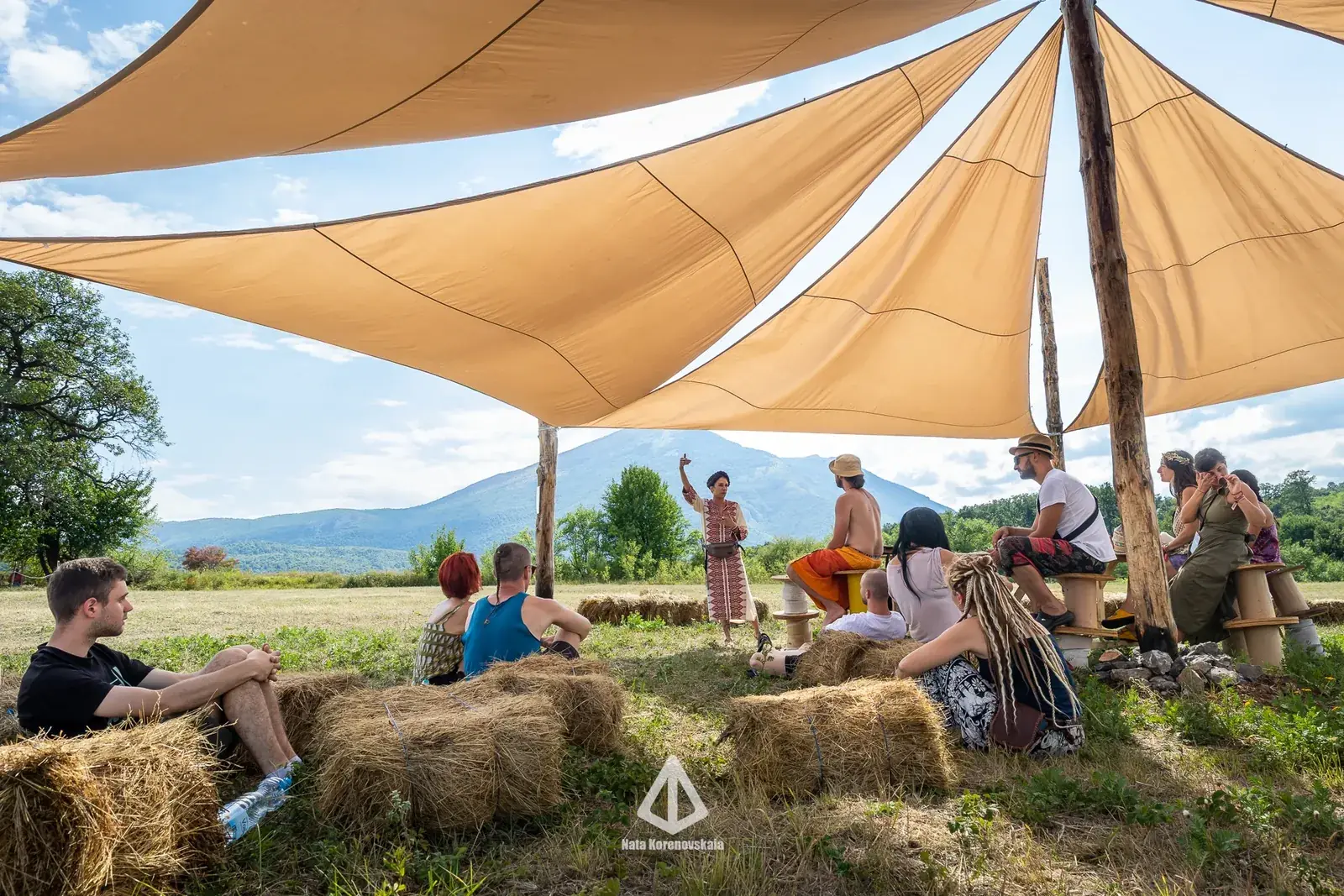
Pyramid Village is a seasonal eco village in eastern Serbia, in the village of Ilino at the foot of Mt Rtanj. From May to October people come here to camp, hike, join retreats and festivals, or volunteer and help build the village by hand. In winter the meadow rests, and so do we.
If you are looking for an eco village in Serbia, or in the Balkans more broadly, this is what to expect: a small, open community in real countryside, with a mountain on the horizon and a sky full of stars at night.
How the eco village works
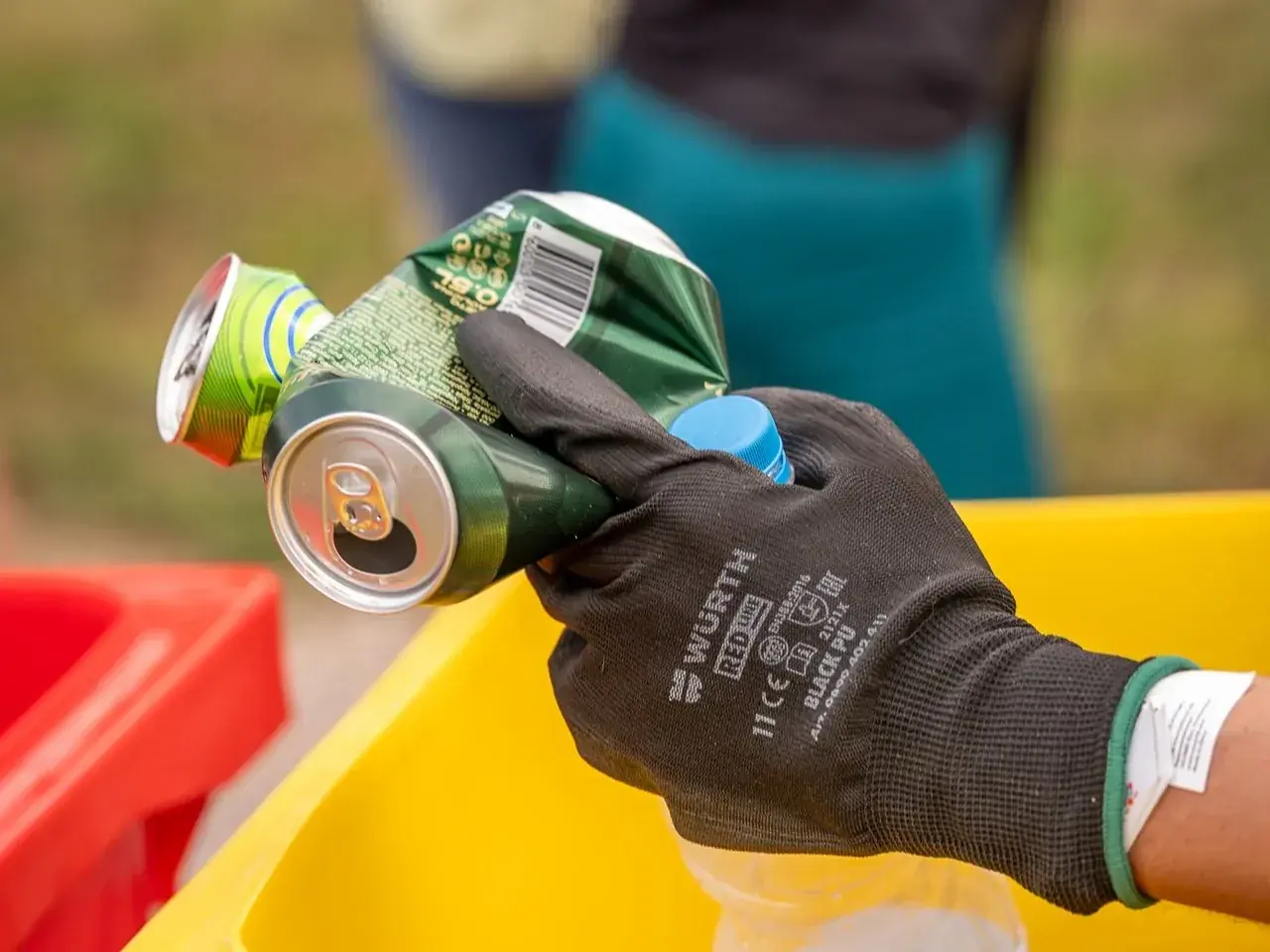
Like eco villages around the world, we try to take as little from nature as we can and give back as much as possible. Drinking water is available at refill stations around the village, so everyone carries their own bottle. Shower water runs through a biofilter, which is why we ask guests to use biodegradable soap. We use dry compost toilets, sort our waste where it is made, cook in a shared kitchen and buy food locally whenever we can. The village is part of the Global Ecovillage Network, the worldwide network of eco villages.
- drinking water refill stations in several places
- showers with a biofilter, so bring biodegradable soap
- compost toilets and waste sorting
- a shared kitchen and meals from local produce
- reusable cups at every event
A real Serbian village around you
Ilino is a small village of about a hundred people. Like many villages in eastern Serbia, it emptied over the 20th century, and in recent years it has started to come back to life through rural tourism. Staying here means meeting the neighbours and seeing how life in the Serbian countryside really looks, away from the cities.
Where you sleep
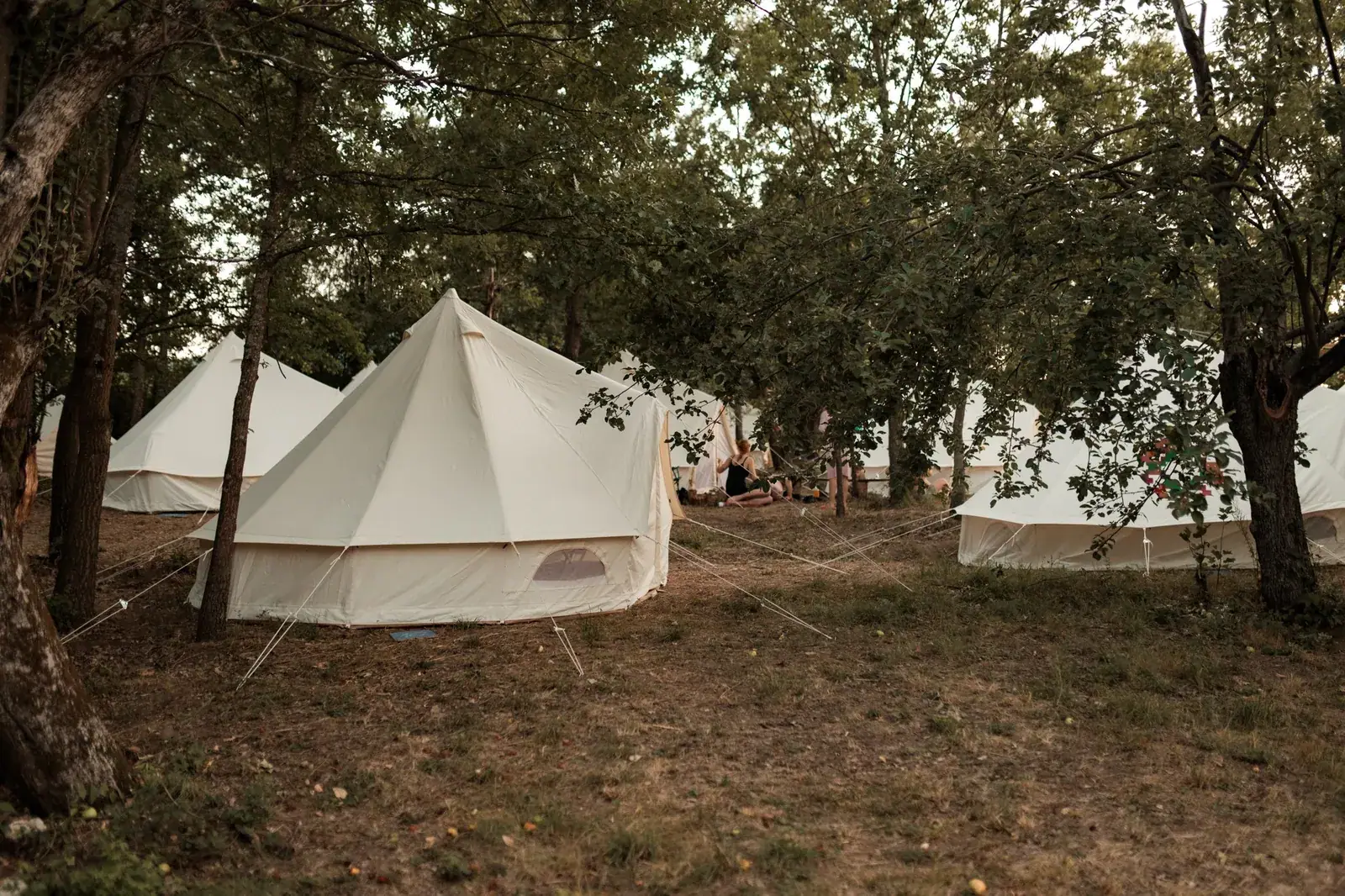
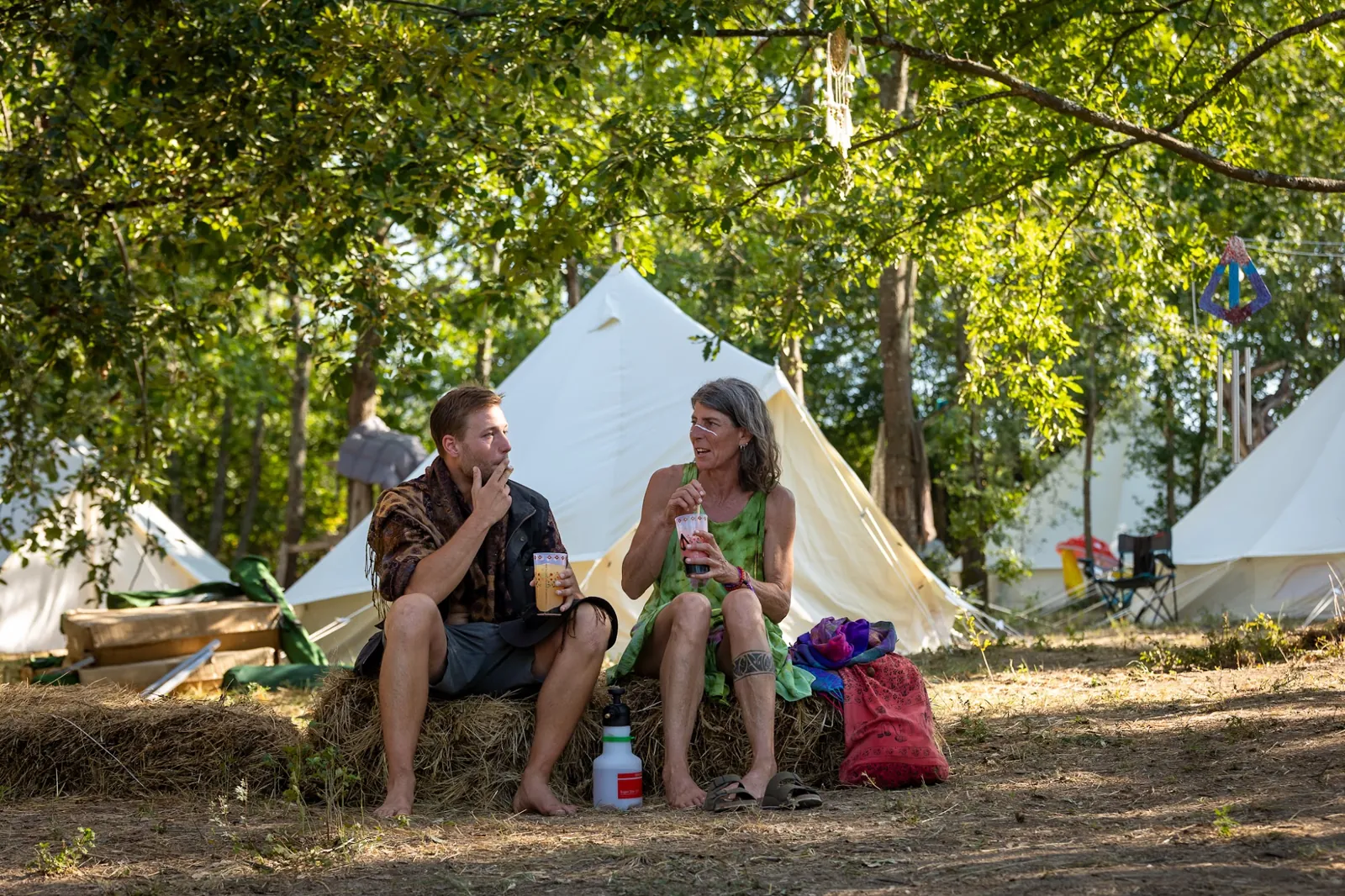
Bring your own tent or hammock, book a bed in a shared tipi, take a private tipi for two or a family, or park your campervan on the meadow. Tents sit in the shade of the grove or out on the open meadow facing the peak. Every stay includes the kitchen, showers, drinking water and parking. If it is your first time, the intro weekend arranges everything for you.
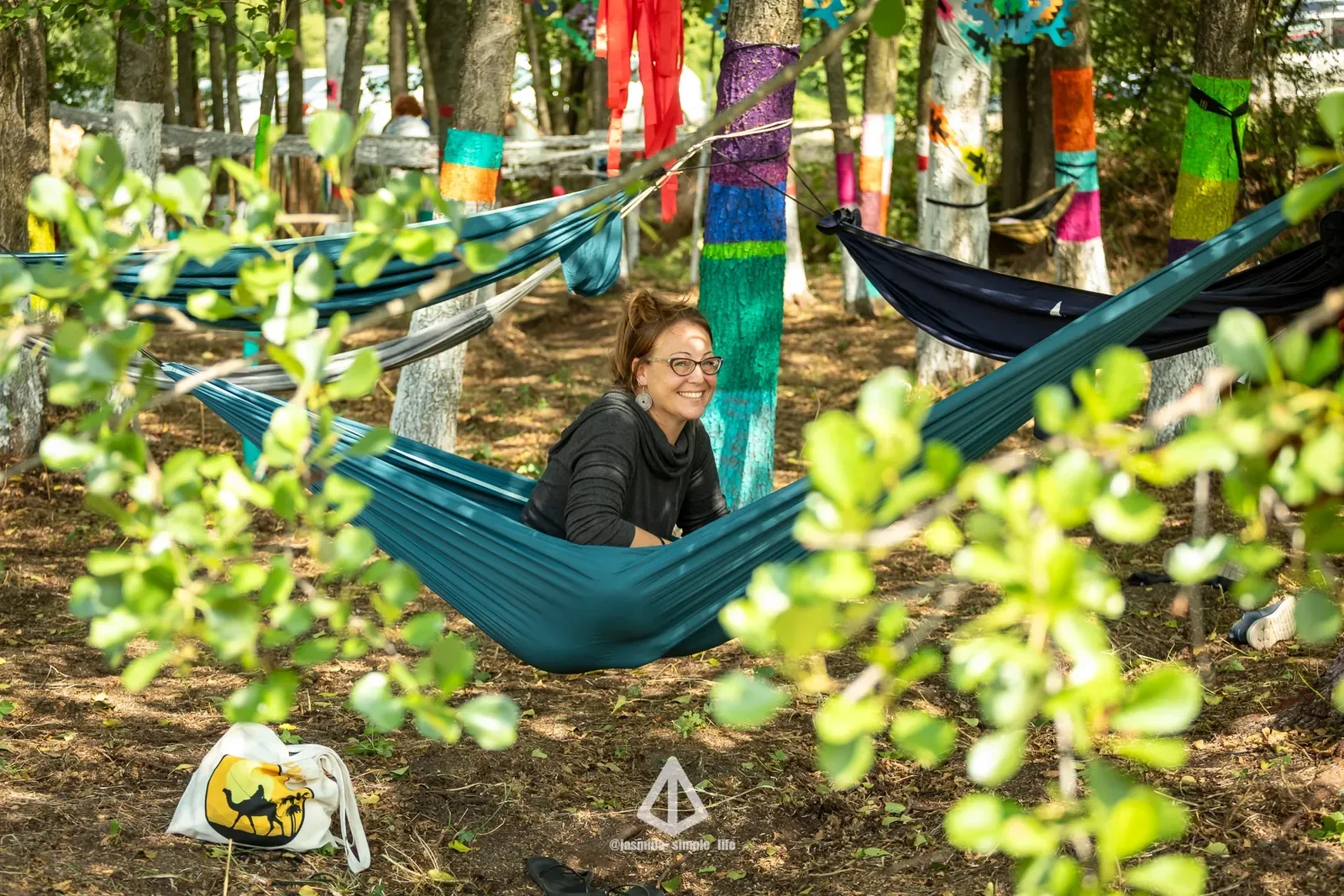
Weather and what to pack
Summer days in the valley are hot, often 28–35 °C in July and August, while nights cool down to around 15 °C, and even lower in May and October. On the summit it is several degrees colder and usually windy. Pack light clothes for the day and a warm layer and a good sleeping bag for the night, plus a head torch, sun cream, and repellent against mosquitoes and ticks.
What to do under Mt Rtanj
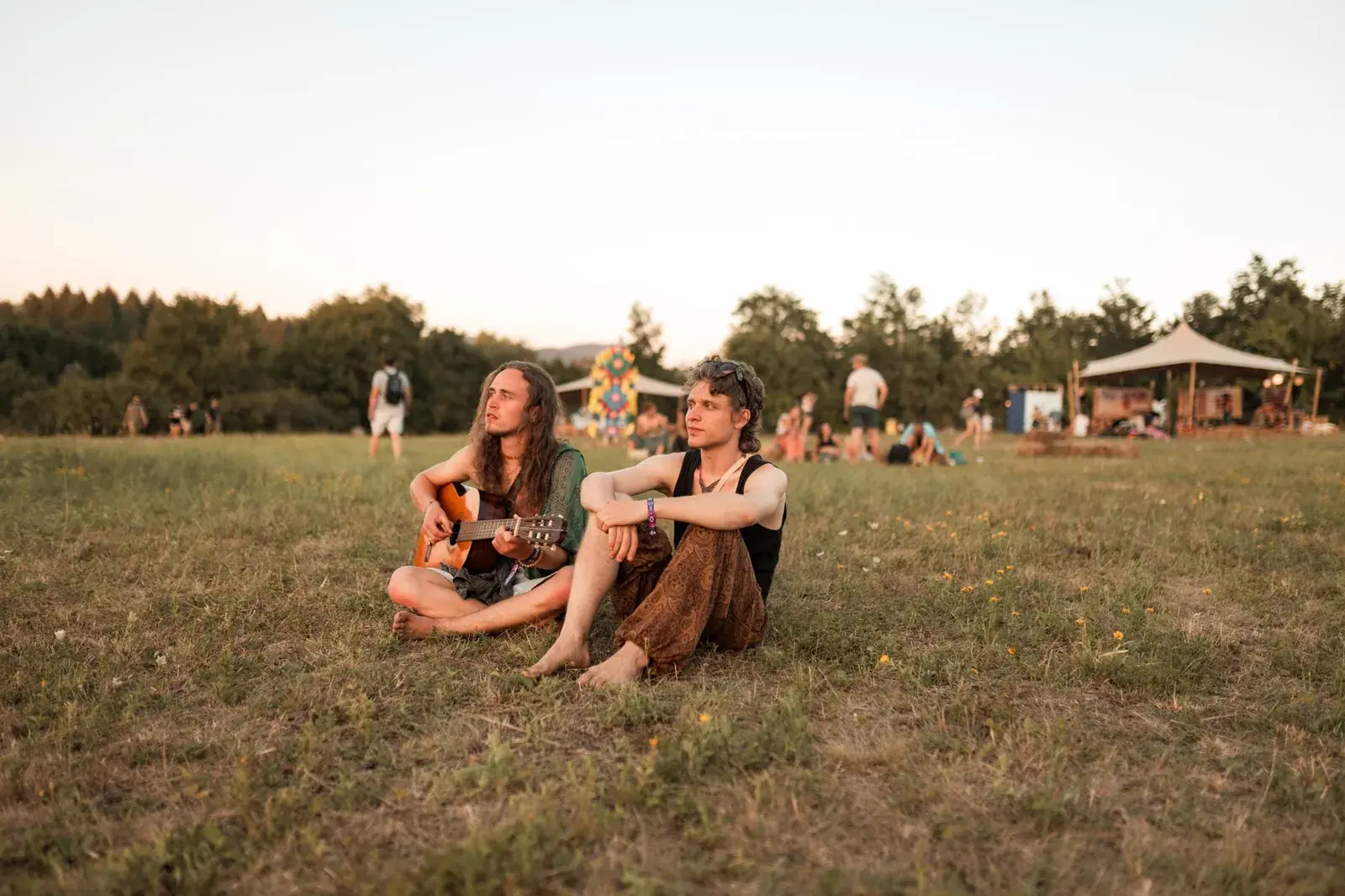
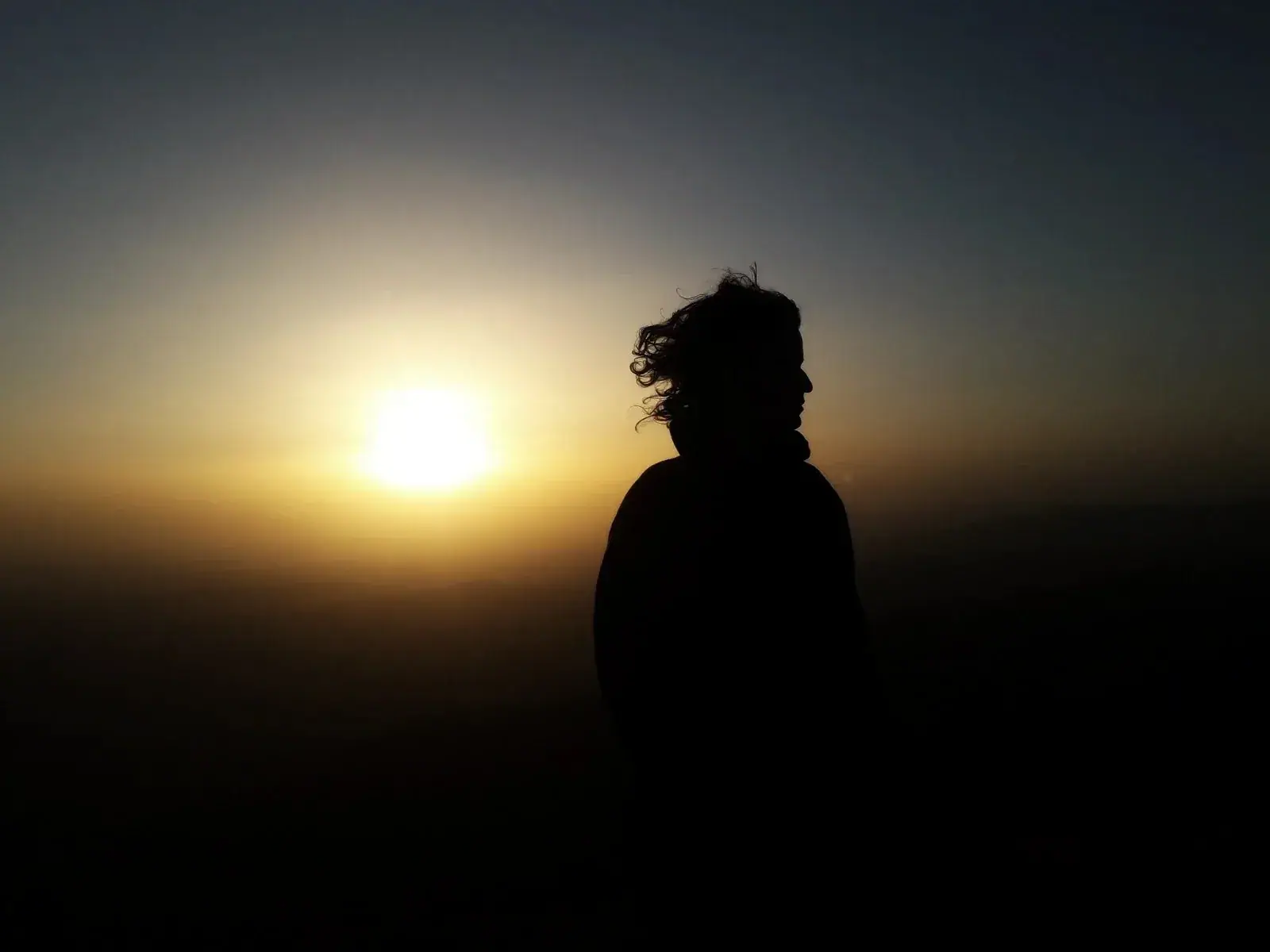
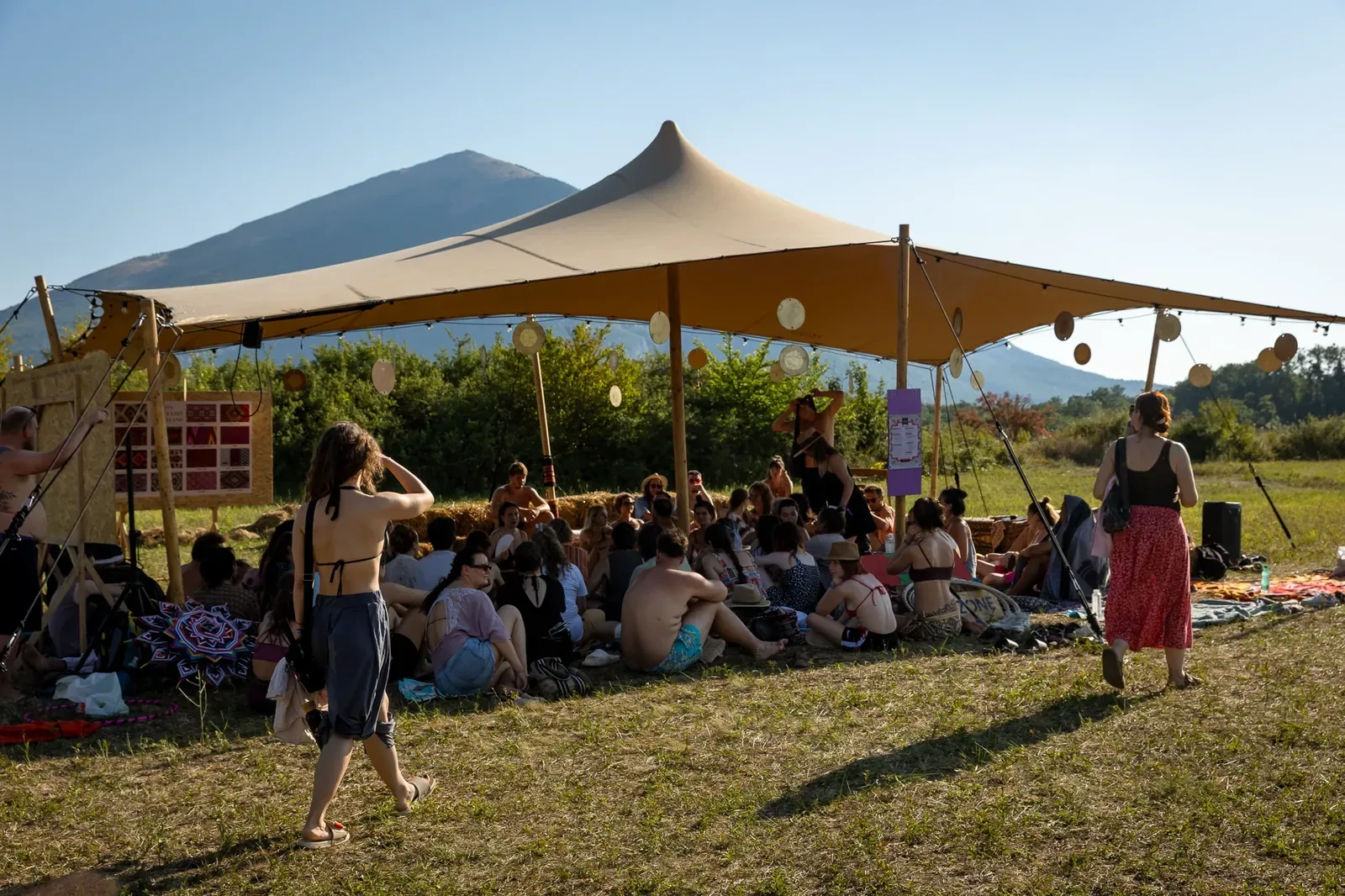
Rtanj is known as the pyramid mountain of Serbia: its Šiljak peak, 1,565 m high, has the shape of a pyramid, and the mountain has been a special nature reserve since 2019. Guests hike to the summit, often at night to watch the sunrise, ride horses across the meadows, visit Bogovina cave, or see the mountain from the air on a tandem paragliding or hot-air balloon flight. Back in the village there are cacao circles, workshops, music by the fire and long, slow afternoons in the shade.
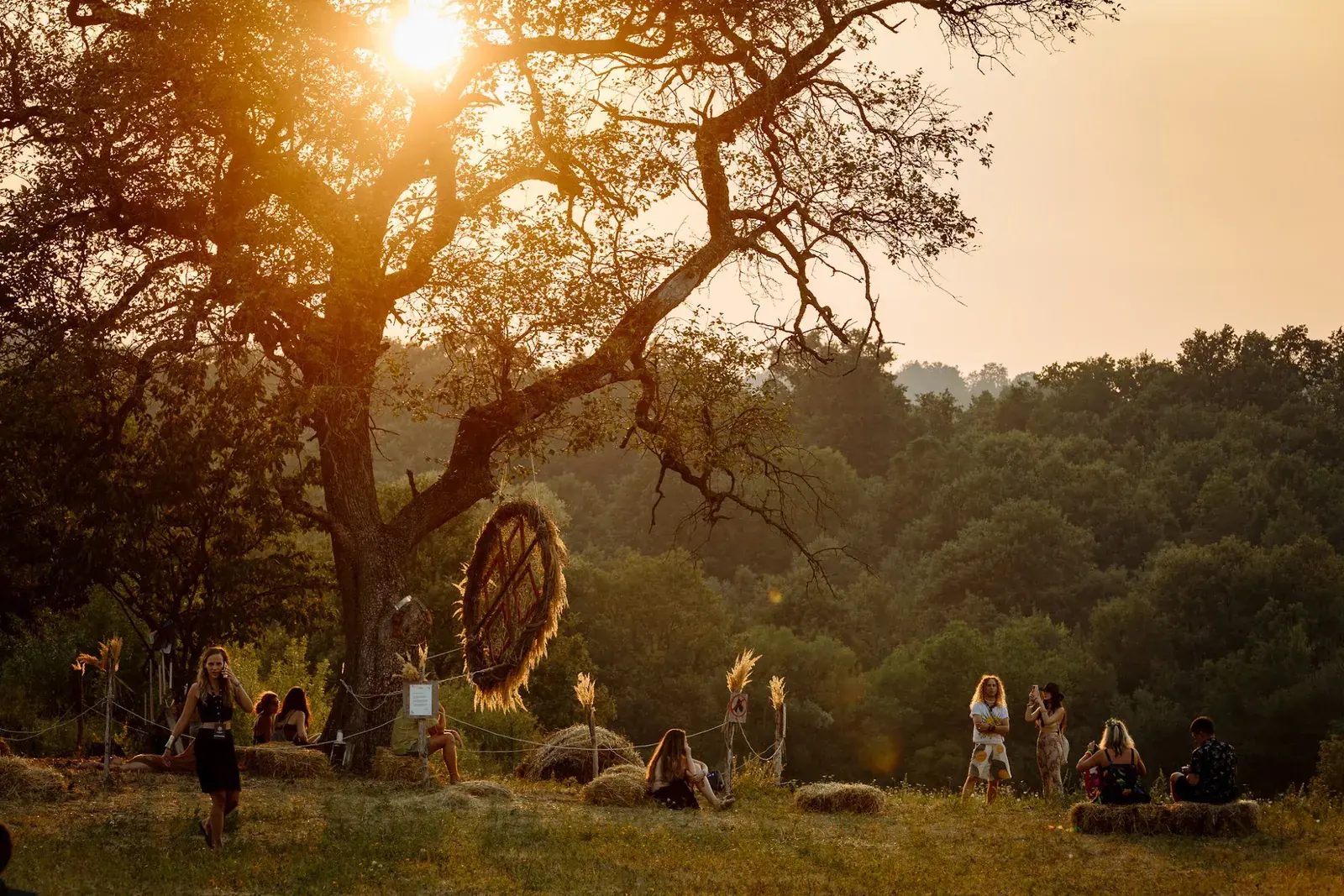
Getting here
The village is in eastern Serbia, about three hours by car from Belgrade and around an hour and a half from Niš. The nearest airports are Niš and Belgrade. Our getting-here page explains every route, including buses and our ride-sharing community.
Staying longer: volunteering
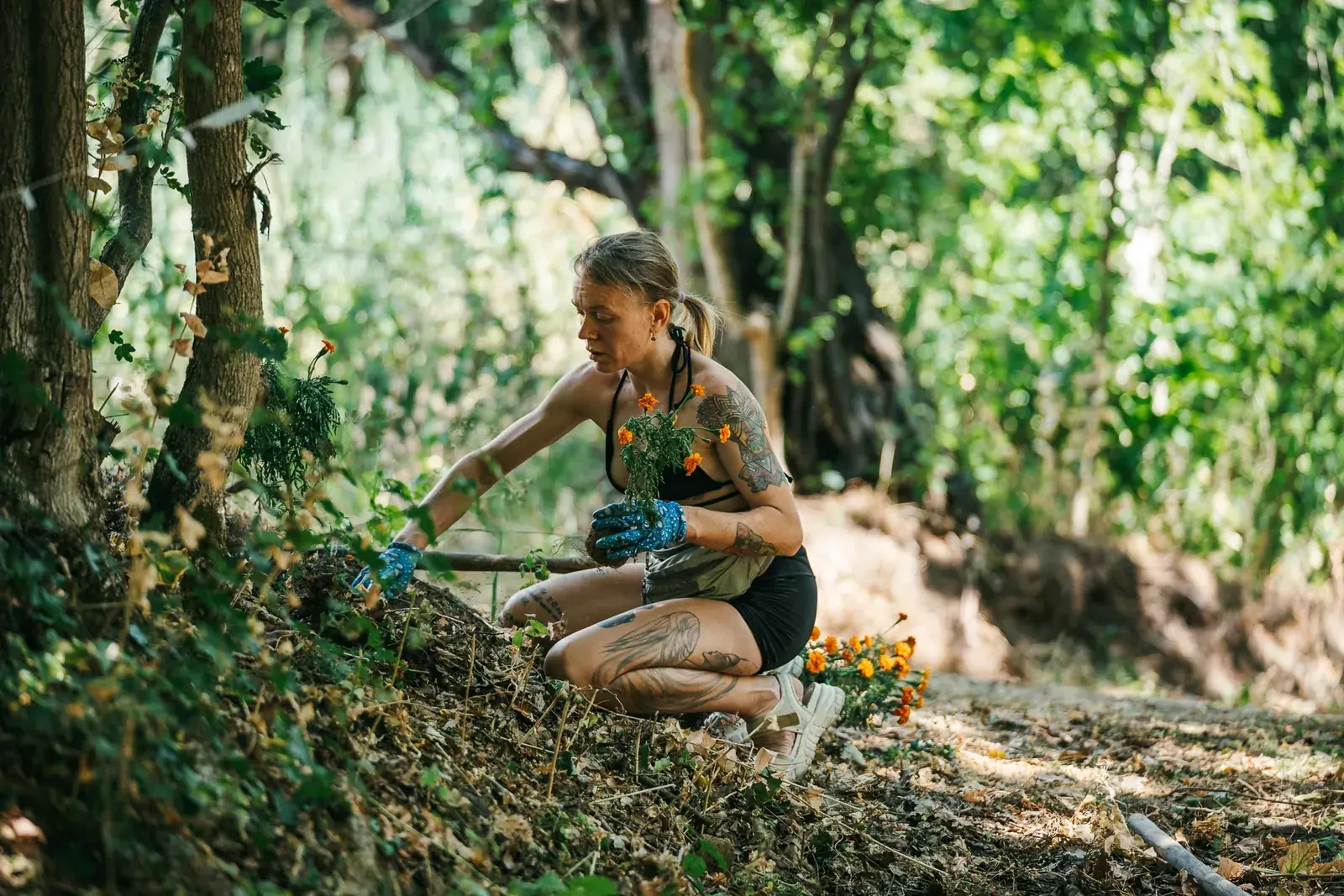
Many international guests first come as volunteers: a stay and meals in exchange for 4–6 hours of work a day, at least three days. Volunteers build, garden, decorate the village, fix old things, cook and look after the waste. It is the best way to see how an eco village in Serbia really runs, and many come back the next season.